domingo, septiembre 07, 2008

En Ruta con las Mujeres / In Route with the Women

Hace unas semanas, después de bajar de Poblazón, tuvimos el primero de dos talleres con el grupo regional caucano de la Ruta Pacifica de las Mujeres. Este primer taller fue hecho en la dinámica convencional de una charla que fue bien recibida por las mujeres presentes, representativas de todos los sectores y comunidades de la región. Aunque hubo mucha interacción, de los aportes más interesantes y nuevos para nosotras fue el repensar cómo el conflicto está afectando a las mujeres de las regiones más amenazadas. Por ejemplo, cómo las fumigaciones afectan a la salud femenina de maneras particulares como abortos, problemas de fertilidad y nacimiento de bebes con deformaciones. También se habló sobre cómo estas fumigaciones causan que sea más difícil para las mujeres el rebusque de alimentos para su familia dado que todas las plantas comestibles mueren por el veneno del glifosato. Una compañera del Patia, un territorio Afro en el sur andino del Cauca, contó que en su región el plátano rusio es supremamente importante ya que de él se hacen coladas para los niños y niñas. Las fumigaciones están destruyendo este cultivo lo que provoca la perdida de su soberanía alimentaria. También nos explicó cómo la ganadería para el consumo de carne afuera de la región es una causa importante de la pobreza extensiva que allí existe.


El segundo taller fue con la Ruta Joven, un trabajo de la Ruta Pacifica de Mujeres que busca fortalecer y crear la sostenibilidad necesaria para que el movimiento social siga su proceso. Ya con este grupo de compañeras integrado por niñas y adolescentes desde los 12 años, se implementó el trabajo de grupo que lanzamos en Tierradentro. Las compañeras de la Ruta Joven aportaron unos análisis agudos que nos hicieron cuestionar sobre nuestro nivel de consciencia cuando fuimos más jóvenes. De todos los análisis del trabajo, los más sobresalientes fueron acerca de la comprensión del uso de los códigos de barra en distintas cosas que, de este modo, se van volviendo productos, inclusos los humanos, y también acerca de cómo los jóvenes somos impulsados a consumir por medio de la televisión, los computadores y los video juegos. Otra perspectiva muy bonita fue sobre los barcos de Colón que, como hojas que van cayendo al suelo, no hubo manera de saber a donde iban a llegar, sueltas e influenciadas por distintos factores que decidieron el sitio al que finalmente arribaron.


También se compartió sobre cómo el conflicto Tecnología vs. Naturaleza está tomando los recursos de la tierra, destruyéndolos, procesándolas y vendiéndolos de vuelta a un precio más alto. Y a todo esto se le llama desarrollo. De todos los aportes, uno de los más espectaculares que compartimos en este espacio especial, fue que, las abejas con la polinización y las hormigas con el abono, son de las criaturas más importantes en el sostenimiento de la vida y la biodiversidad en la Madre Tierra. En la colmena y en el hormiguero las individuas que hacen estas labores son todas hembras; entonces, es la labor de insectos hembras la directamente responsable del sostenimiento del equilibrio del que dependemos plantas y animales, humanos y no humanos en este planeta. Fue ésta una pequeña reflexión para las compañeras y compañeros que no reconocen sus aportes importantes a nuestras comunidades y luchas, como también para aquellos que no valoran el trabajo de las mujeres, jóvenes y niñas.


-------------------------------------------------------------------------------------------------

A few weeks ago, after coming down from Poblazón, we had the first of two workshops with the Ruta Pacifica de Mujeres-Regional Cauca. This first workshop was done in the conventional dynamics of a story telling that was well received by the women present, representing all sectors and communities in the region. Although there was much interaction, the most interesting contributions that were also new for us were how to rethink how the conflict is affecting women in the regions most threatened. For example, how the aerial fumigations affect women's health in ways such as abortions, fertility problems and birth of babies with deformities. There was also talk about how the spraying caused it more difficult for women find food for their families since all the edible plants die from the poison of glyphosate. A compañera of the Patía, a Afro-Andean territory in southern Cauca, said that in her region the Rusia variety of bananas is extremely important because it is the base of a sort of shake made for children. The fumigations are destroying the crop leading to the loss of their food sovereignty. The compañera also explained how the livestock for consumption of meat outside the region is a major cause of poverty that extends there.
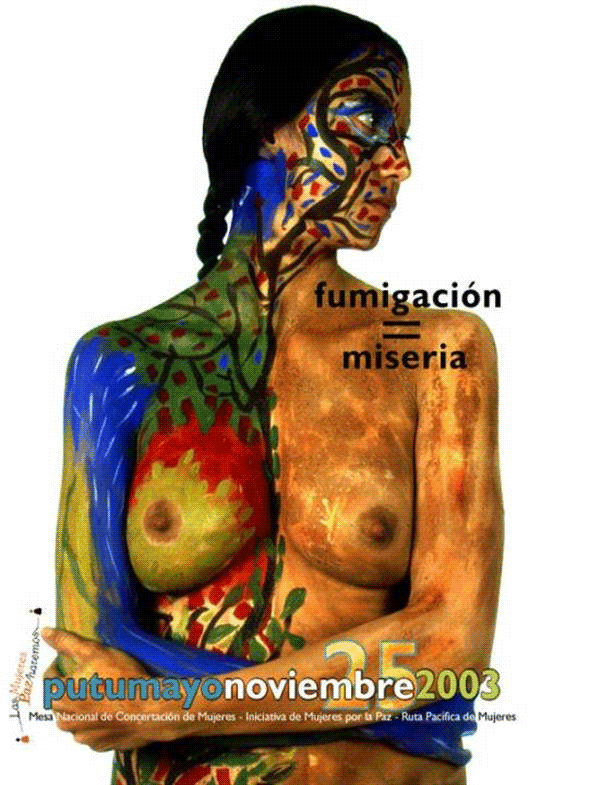
The second workshop was with the Ruta Youth, a work of the Ruta Pacifica de Mujeres that seeks to strengthen and create sustainability for the social movement to continue its process. With this group of girls and adolescents rangign from age 12 to the mid 20s, we implemented the group work that we launched in Tierradentro. The companions of Ruta Joven provided some sharp analysis that made us question our own level of consciousness when we were younger. Of all the analysis work, most were understanding about the use of bar codes in different things, thus, are becoming products, including humans, and also about how youth are driven to consume through television, computers and video games. Another perspective was very unique on Columbus´s ships, was that the ships were like leaves that are falling to the ground, there was no way of knowing where they were going to go, get lost and how they were influenced by various factors that decided the site where they finally arrived.

It was also shared was the conflict of technology vs. nature in the taking resources of tha land, destroying tha land, processing what was exploited and selling them back at a higher price. And all this is called development. Of all the inputs, one of the most spectacular that we shared in this particular area, was that the bees with pollination and the ants with the composting, are some of the creatures of utmost importantance in sustaining of life and biodiversity on our Mother Earth. In the hive and the anthill the individuals who do this work are all female; then to reflect taht it is the work of the female insects directly responsible for the upkeep of the balance of plants and animals that humans and non-humans depend upon on this planet. It was a little reflection for the sisters and peers who do not recognize their important contributions to our communities and struggles, but also for those who do not value the work of women, youth and children.

sábado, septiembre 06, 2008

La Cuna de los Nasas / The Cradle of the Nasas

De Raíces cruzamos por Popayán hacia Tierradentro. La primera noche aterrizamos en San Andrés de Pisimbalá para descansar y partimos en vuelo a la mañana siguiente al Resguardo de Calderas conocido en Nasa Yuwe como la comunidad de Yu´tuk, es decir, “agua que nace del totumo”. Yu´tuk es una comunidad que se conoce en otroas regiones del país básicamente por dos productos, La Coca Sek y el Nasa Esh. La Coca Sek es una gaseosa elaborada con hoja de coca que ha recibido demandas y ataques por parte de la multinacional asesina Coca-Cola. Por su parte, el “Nasa Esh” es un té de coca que también ha recibido ataques del INVIMA (Instituto Nacional de Vigilancia de Medicamentos y Alimentos). A pesar de los ataques, estas propuestas de proyectos productivos siguen luchando dignamente por sacar su comunidad adelante.

Yu´tuk fue el primer lugar en donde las abejas, después de casi 20 ciclos lunares de polinizaciones y aconsejados por el compañero quetzal, comenzamos la implementación de una nueva dinámica para hacer los talleres alrededor de la obra de Plan Colombia. Este nuevo proceso comenzó con una breve explicación de nuestra Colmena y el trabajo. Después, dividiendo a los participantes en cuatro grupos, se le pidió a cada grupo que en 30 minutos analizaran una parte distinta de la obra. Luego de este análisis colectivo, cada grupo se tomó el tiempo necesario para explicar su parte a los demás. Al terminar las presentaciones, las abejas contestamos preguntas de los participantes sobre partes de la obra y compartimos las explicaciones de algunos puntos.

En territorio Nasa los talleres se hicieron de una manera bilingüe (Nasa Yuwe y Español). Nosotras promovimos que los y las jóvenes que tenían timidez de hablar en el idioma invasor, explicaran sus análisis en Nasa Yuwe mientras que los profesores nos ayudaban a nosotras con las interpretaciones. Nosotras explicamos a los y las jóvenes la importancia de que se sintieran orgullosos de su lengua, su cultura y tradiciones al tiempo que su preservación en el futuro.

Aunque este trabajo en grupos funcionó muy bien con los estudiantes de bachillerato, no fue la dinámica más apropiada para los niños y niñas de primaria. Con los chiquitos hicimos el trabajo de identificar los animales que están en el telón con sus nombres en Nasa Yuwe y miramos las escenas del túnel en espiral que tratan sobre la tul (huerta), el kutxh (maíz) y el ipxkát (fogón). Con los padres de familia presentes, hablamos de la importancia de mantener la sabiduría propia de estos espacios, por ejemplo, los conocimientos sobre qué plantas medicinales y alimentarias de la tul plantar, cómo hacerlo y cuándo hacerlo; también las enseñanzas de los abuelos y abuelas sobre el ipxkát y las tres tulpas (piedras de cocinar).

Con los niños y niñas chiquitos de esta comunidad aprendimos que, en la obra, el oso de anteojos es el e´sxavx, los pájaros son vicha, el cóndor es khdul, la culebra ush mel, las hormigas khá´khá, el colibrí e´ç y las abejas wáwá o çxhi´dx. Con los estudiantes grandes se habló sobre cómo ellos y ellas se sentían como vichas, creados para ser libres pero el estado seguía enjaulándolos. También mencionaron la amenaza que los transgénicos significan para el tradicional kutxh capio (el maíz tradicional). En esta comunidad, que ha enfrentado grandes desafíos como el terremoto de 1994 o los 40 años en que la iglesia católica de la región prohibió el uso del Nasa Yuwe en las escuelas y colegios, los y las jóvenes, niños, niñas, profesores y mayores, siguen en un proceso fuerte, digno e inspirador por mantener su lengua, sus costumbres y por recuperar el conocimiento y valores de sus sitios sagrados.

En el segundo taller en el resguardo de Timbichicue o Tbi´sxucue que significa “planada de salvia”, trabajamos con los jóvenes con la dinámica de grupos donde analizaron y reflexionaron la obra desde su visión propia. Un grupo mencionó cómo este territorio ha cambiado desde el paso de Sebastián de Belalcázar, hasta los presentes políticos del Estado. También vieron una semejanza entre la avispa de gafas y el presidente Uribe. Otros se identificaron con las hormigas que cuidan la tierra. Vieron en los agroquimicos las ideas de “desarrollo” y “progreso” que promueve el Estado y que buscan acabar con las hormigas al igual que con los indígenas. Se mencionó cómo programas del Estado como “Familias en Acción”, son nuevas políticas que buscan acabar con los movimientos populares y también promueven la segunda reelección de Uribe para la presidencia, algo que se funda en la segunda fase de Plan Colombia. Sin embargo, aunque el Estado quiere acabar con todos los pobres; los indígenas, los afrodescendientes, campesinos y urbanos, en particularmente con políticas como el servicio militar obligatorio, el símbolo del caracol en la obra, les da la esperanza de que “nunca nos van a acabar”.

En el último taller con los niños y niñas de la escuela de Lomitas en Pisimbalá, aprendimos que acá los pájaros son wicha y no vicha como en Calderas. Que la atxh (ruana) se hace con la pisxa khas (lana de oveja) y que la Mama Coca es Éçx. En el Kiwe (tierra) de la Tul se siembran alpes (arveja), akhus (ajo), á´s (arracacha), áwá (ají), káka (papa), mutkwe (lulo), spuulxa (cebolla) y txhá´ (col).

Aunque nuestra primera visita a Tierradentro fue muy rápida, compartimos y aprendimos muchas cosas con personas de la región que fueron muy enriquecedores para nosotras. Esperamos que pronto el tiempo del sxape (caracol) nos permita volver por estas tierras, la cuna de los Nasa.

-----------------------------------------------------------------------------------------------

From Raices we crossed over Popayan and continued to Tierradentro. The first night we landed in San Andres de Pisimbalá to rest and the following day we continued flight to the Resguardo Calderas, in Nasa Yuwe known as the community of Y'tuk (water born from the gourd), a community that amoung many things is known for the two products, Coca Sek and Nasa Ech. Coca Sek is a soda made with coca leaf that has received trademark lawsuits and attacks by the murderous multinational Coca-Cola. On the other hand Nasa Ech, is a coca tea has also received attacks from INVIMA (National Institute for Drug and Food Supervisory). Despite the attacks, these proposed projects are still struggling with dignity to be able to move their community forward.

Yu'tuk was the first place where the bees, after nearly 20 lunar cycles of pollinating, with some advice from the quetzal compañero, we began trying out a new workshop dynamic in the Plan Colombia illustration. This new process began with a brief explanation of our Beehive and work. After dividing the participants into four groups, he asked each group to analyze for 30 minutes a different part of the design. After this collective analysis, each group took the time to explain there analysis to the other groups. At the conclusion of the presentations, the Bees answered questions from participants about the graphic and shared some more insight into the works.

In Nasa territory the workshops were in a bilingual (Spanish and Nasa Yuwe). We encourage young people who were shy to speak in the invaders language to explain their analysis in Nasa Yuwe while teachers helped us with interpretations. We explain to them why we think its important that young people feel pride of their language, their culture and traditions while preserving it in the future.

Although this work in groups went very well with high school students, it was not the most appropriate dynamics for children of primary school. With the lil ones we did a exercise of identifying animals that are in the graphic with their names in Nasa Yuwe as well as aspects of the tunnel spiral like the tul (garden), the kutxh (corn) and ipxkát (cooking fire). With parents present, we spoke about the importance of maintaining the wisdom of these daily spaces, for example, knowledge about what food and medicinal plants are in the tul, how and when to plant them, also the teachings of the grandfathers and grandmothers around the ipxkát and on the three tulpas (cooking stones).

With the young children we learned that the spectacled bear is the e´sxavx, the birds are vicha, the condor is khdul, the snake ush mel, khá´khá ants, the hummingbird i´Ç and bees or wáwá o çxhi´dx. With the older students they spoke about how they felt like vicha with wings to fly and free, but the state always has tried to cage them. They also mentioned the threat that genetically modified crops mean for the traditional kutxh capio (corn). In this community, which has faced great challenges such as the earthquake of 1994, 40 years of the Catholic church in the region baning and beating for the use of Nasa Yuwe in schools and colleges. Here the young people, children, teachers and elders, maintain a strong, dignified and inspiring resilience to maintain their language,their customs as well as retrieve the knowledge and values of their sacred sites.

In the second workshop in the Resguardo of Timbichicue or Tbi'sxucue which means "plane of sage" we worked with young people with the group dynamics of analyses and reflectiond within ones own views. One group mentioned how this territory has changed since the passage of Sebastian Belalcázar to the present situation with the state. They also saw a similarity between the wasp with glasses and President Uribe. Others identified with the ants caring for the earth. With the scene of agrochemicals we crossed the concepts of "development" and "progress" that promote the state and look to finish off ants just as they do indigenous peoples. It was mentioned how programs of the state like "Families in Action", are new policies that seek to eliminate the popular movements and also promote the second re-election of Uribe for the presidency, all this being part of the second phase of Plan Colombia. However, while the state wants to eliminate all the poor, indigenous, Afro-descendants, campesinos and urban poor, through policies such as compulsory military service, the symbol of the spiral in the works is one that gives hope that "they will never finish us off."

At the last workshop with the children from the school of Lomitas in Pisimbalá, we learned that the birds here and wicha and not vicha as in Calderas. That the atxh (ruana or a woollen poncho) is done with the pisxa Khas (sheep´s wool) and Mama Coca is Éçx. On the kiwe (land) the Tul is planted with alpes (pea), akhus (garlic), á´s (arracacha), áwá (pepper), káka (potato), mutkwe (lulo) spuulxa (onion) and txhá´ (cabbage).

Although our first visit to Tierradentro was too fast, we learned and share many things with people in the region that were very enrichening for us. We hope that soon the time of sxape (snail shell) allows us to return to these lands, the cradle of Nasa.

Solidaridad con el Pueblo Yukpa!!

martes, septiembre 02, 2008

Profundizando Raíces - Deepening Roots

Al norte de Popayán las abejas y el quetzal nos encontramos con un compañero de Ambaló del grupo ethnoeducativo programa de educación del Consejo Territorial de Autoridades Indígenas del oriente Caucano-COTAINDOC que nos llevó a una asamblea de la comunidad Nasa del Resguardo Raíces de la Zona Oriente. Llegamos muy animados porque sabíamos que íbamos a estar en una comunidad denominada por sus autoridades tradicionales como un T.L.T. Territorio Libres de Transgénicos y porque que nos invitaban como parte de la programación para compartir una explicación breve de la obra del Plan Colombia que fue bien recibida por la comunidad.

La comunidad compartió con nosotros, las abejas y el quetzal, varios aspectos particulares de su realidad. Se habló de los procesos de desertificación (el desgaste de nutrientes de los suelos) y erosión causados por los agroquímicos por lo que el cabildo ha estado impulsando que la comunidad abandoné su uso. También se mencionó como el acueducto de la región, construido y planeado con la participación de varias personas de la comunidad, fue recientemente privatizado. Un ejemplo de las manifestaciones locales relacionadas con la firma Del Plan Departamental de Aguas y la ley de aguas por parte de la administración del departamento.

En la Asamblea, después de compartir nuestra obra, se menciono un proceso que está ocurriendo en muchos territorios del cauca y que es verdaderamente inspirador para nosotros. Se trata de La Liberación de la Madre Tierra que es la reforma agraria que las comunidades indígenas han necesitado desde que Belalcázar comenzó el saqueo, masacres y robos de tierras a los pueblos del sur occidente colombiano. Este proceso es la respuesta más democrática y efectiva ante el Estatuto Rural que mantiene la concentración de tierras en los poderes de grandes terratenientes que no producen sus alimentos de ellas pero que se enriquezan por medio de sus megaproyectos de monocultivos como la caña de azúcar y la palma aceitera. Tampoco respetan la necesidad de la tierra de mantener sus capas nativas de flora y fauna. Conociendo que esto está sucediendo en la región, nosotras incorporamos el tema como parte de la charla para contextualizarlo en lo local. En la región, a pesar de la constante amenaza del Estado por medio del ESMAD y el Ejército, en los últimos años se han realizado recuperaciones de tierras en las haciendas del Octavio y la Alsacia en las que hoy en día se siembran cultivos y se redistribuyen tierras a las familias necesitadas.

La Liberación de la Madre Tierra nos se trata solamente de recuperar tierras perdidas en la pesadilla de los últimos 516 años para que la juventud y nuevas generaciones tengan donde construir su hogar y sembrar su Tul. Es también una acción que busca sanar a la Tierra de su mal uso, abuso, envenenamiento y contaminación para que se pueda volver a vivir de ella de una manera armónica al tiempo que ella misma comienza su reforestación. Ya cuando los animales, plantas, humanos y otros seres nativos de estas tierras tomen su territorio de nuevo, se podrá avanzar en el camino de restablecer el equilibrio que se perdió con la invasión europea.
-------------------------------------------------------------------------------------------------
To the north of Popayan bees and the quetzal met a comapñero from Ambalo of the ethnoeducation program of the Territorial Council od Indigenous Authorities of Eastern Cauca-COTAINDOC, who took us to an assembly of the Nasa community in the Resguardo of Raices. We arrived very motivated because we knew we were going to be in a community dubbed by its traditional authorities as a TLT Territory Free of Transgenicos (genetically modified organisms), and because we were invited as part of the programming to share a brief explanation of the Plan Colombia graphic which was welcomed by the community.

The community shared with us, bees and the quetzal, several aspects of their reality. There was talk of desertification processes (the wear of nutrients from the soil) and erosion caused by agricultural chemicals that the Council has been trying to encourage the community to abandon their use. Also mentioned was the aqueduct in the region, planned and built with the participation of several persons in the community, it has recently been privatized. An example of the local manifestations related to the signing of the Departmental Plan of Waters and the Water Law by the administration of the department.

In the Assembly, after sharing our work, a process that is occurring in many areas of cauca was mentioned that is truely inspiring for us. This is the Liberation of Mother Earth, that is land reform that indigenous communities have needed since Belalcázar began looting, massacring and stealing lands from the people of the south western Colombia. This process is the most democratic and effective response to the Rural Statute that looks to further the concentration of land in the powers of large landowners who do not produce their food from them but that grow wealthy through the mega projects such as monoculture of sugar cane and oil palm. Nor do they respect the need for land to maintain its layers of native flora and fauna. Knowing that this is happening in the region, we incorporated the topic as part of the talk in order to contextualize to the local. In the region, despite the constant threat of State, ESMAD and the Army, in recent years there have been recoveries of land in the estates of Octavio and Alsacia in which today crops are growing and land has been redistributed to needy families.

The Liberation of our Mother Earth is not only reclaiming land stolen in the nightmare of the past 516 years so that the youth and new generations have a place to built their home and where they plant their Tul. It is also an action that seeks to heal the Earth of its misuse, abuse, poisoning and pollution, in order to be able to revive it in a consistent manner while it begins its restoration. And when animals, plants, humans and other creatures native to this land take back their territory, the land will be able to move forward on the path to restore the balance that was lost with the European invasion.

domingo, agosto 31, 2008

La Juventud Caucana - Cauca´s Youth

Volviendo al casco urbano de Popayán, las abejas y el quetzal nos integramos como participantes al encuentro de la Escuela Departamental de Iniciativas de Organizaciones Juveniles. En este encuentro hubo participación de los jóvenes campesinos de Inzá (ACIT), la Casa de la Juventud de las Palmas Comuna 7, la mesa de jóvenes del Consejo Regional Indígena del Cauca, estudiantes de la granja-escuela Amalaka, la Ruta Pacifica de Mujeres, el Comité por la Integración del Macizo Colombiano (CIMA), la escuela popular de jóvenes de Nariño, el Colectivo Territorio Libre y el Movimiento Palenquero del Cauca. El grupo en su totalidad representó la diversidad de los distintos movimientos sociales del departamento y, como solamente la juventud puede hacer, llegaron animados para compartir y aprender, creando una dinámica divertida en todos los trabajos colectivos del fin de semana.

Entre los varios ejercicios hubo uno sobre concientización acerca de las problemáticas y resistencias que están viviendo distintas regiones y sectores del Cauca. Todas las presentaciones de los grupos de trabajo que se formaron para los distintos temas, dejaron ver diferentes pensamientos y visiones propias de los participantes. Luego, se realizó otro ejercicio sobre comunicaciones con la propuesta de crear un periódico colectivo de todos los sectores del Cauca. Después, se desarrolló otra actividad que nos gustó mucho: un trabajo de cartografía social que articuló el tema de identidad y el territorio. Para esto, se formaron grupos que dibujaron sobre un mapa del Cauca sus respuestas a preguntas sobre movilización, prácticas y dinámicas de defensa, y a las problemáticas que viven en sus territorios. Al final, se realizó otro trabajo de reflexión sobre la necesidad de unidad y colectividad en la defensa del territorio.

En otro momento, mostramos el telón de Plan Colombia y compartimos el organismo que es nuestra Colmena pero no realizamos la charla como tal, ya que en los ejercicios previos quedó claro que todxs conocían su contenido. Por esto, preferimos que ellxs analizaran la obra y que nos contaran qué ideas, pensamientos y reflexiones les surgían al mirarla.

Al final de los dos días de talleres, los grupos acordaron varios ejes de acción, por ejemplo, estar en contra de la militarización, apoyar la objeción de conciencia hacia el servicio militar obligatorio, defender el derecho a una vida digna y el fortalecimiento de una política pública de y para la juventud. En este espacio nos reencontramos con viejxs amigxs y nos vimos con otrxs amigxs desconocidxs. Aunque corto, nos dio ánimo y fue para nosotras un verdadero gusto y esperanza estar con la juventud de esta región conocida por su dignidad y lucha constante. Quedamos confiados al poder presenciar la sostenibilidad de estos procesos que se ha venido fortaleciendo con el tiempo para seguir adelante en la defensa de un territorio propio.

-----------------------------------------------------------------------------------------------

Returning to the city of Popayan, the bees and the quetzal integrated as participants to the meeting of the Departmental School of Youth Organization Initiatives. At this meeting there was involvement of young campesinos of Inzá (ACIT), Casa de la Juventud of the barrio Las Palmas in the Comuna 7, the youth group of the Regional Indigenous Council of Cauca, students from farm-school Amalaka, Ruta Pacifica de Mujeres, the Committee for the Integration of the Colombian Macizo (CIMA), the popular youth school of Nariño, the Collective Free Territory and the Palenquero Movement of Cauca. The group as a whole represented the diversity of the various social movements of the department and, as only youth can do, created a space that encouraged sharing and learning in a fun dynamic that over took all the collectives works of the weekend.

Among the exercises there were a number of raising awareness about the problems they are experiencing and the resistance from different regions and sectors of Cauca. All presentations of the working groups that were formed around different subjects and developed through the different thoughts and visions of the participants themselves. Another exercise was conducted on communications with the proposal to create a newspaper from all sectors of Cauca. Later, an activity that we liked: a social cartography exercise that articulated the theme of, identity and territory. For this, they formed groups that drew on a map of Cauca their answers to questions about mobilization, practices and dynamics of defense, and the problems lived in their territories. In the end, another exercise of reflection on the necessity of unity and community in the defense of the territory.

At another point, we showed the Plan Colombia banner and we shared about our Beehive but we did not do the storytelling as such, it became clear that everyone in attendance knew its contents. For this reason, we prefer that the other creatures analyze the graphic and tell us their ideas, thoughts and reflections that arose as they looked at it.

At the end of two days of workshops, panels agreed on several lines of action, for example, a stance against the militarization, to support the right of conscientious objection to the obligatory military service, upholding the right to a decent living and reinforcement of a public policy by and for youth. In this space we encounter olde friends and we were met with friends taht had yet to be known. Although short, the space charged our energies and gave us a real pleasure and hope to be with the youth of this region known for its constant struggle and dignity. We are confident after being able to witness the sustainability of these processes and how they are strengthening over time to move forward in defense of the territory.

sábado, agosto 30, 2008

Conociendo a los Kokonuco - Getting to know the Kokonuko

Al salir del Nudo de los Pastos tomamos un pequeño descanso en el Huila antes de tomar vuelo nuevamente hacia la ciudad de Popayán. Antes de retomar el proceso de Polinizaciones en el casco urbano, nos encontramos con un compañero Quetzal que estaba de visita por acá desde Norteamérica y seguimos el vuelo juntos a la comunidad Kokonuco del Resguardo de Poblazón.

El primer día pasamos por la escuela de Alto Pesares donde realizamos una charla del Plan Colombia con las madres y los padres de familia. A las personas presentes les gustó el trabajo y lo contextualizaron en su comunidad en relación con la ley de aguas que fue aprobada a nivel departamental esta semana. Esta ley asegura las regalías de los recursos y derechos hídricos de las comunidades a los intereses de empresas multinacionales. También se mencionó como la Corporación Colombia Internacional-CCI está lanzando proyectos de monocultivos de mora en el resguardo que van acompañados por abonos sintéticos, plásticos y mangueras para un proyecto productivo que dura unos cinco años mientras que las variedades de maíz autóctonos de este pueblo, de gran valor cultural, se están perdiendo si que se haga nada por impedirlo.

Al día siguiente, en el mismo resguardo, pero en la escuela del pueblito de Poblazón, acompañamos las actividades de la comunidad en reconocimiento del Día Internacional del Indígena. Las actividades comenzaron con la bienvenida del Gobernador del resguardo, que es un hombre bastante joven, demostrando que esta comunidad y los otros cabildantes están haciendo esfuerzos por crear la sostenibilidad necesario para mantener su propio proceso como comunidad indígena. Luego, siguió el compañero del CRIC que explicó, como parte del "Dialogo de Saberes" del día, la importancia del Sistema Educativo Propio y del Proyecto Educativo Comunitario como aspectos fundamentales para el Plan de Vida de una comunidad.

Después, el Gobernador explicó algo del contexto histórico de su comunidad que fue constituida como resguardo indígena de 6.000 ha en 1.505, pero con la perdida de tierra por la expansión de la conquista de los españoles, el avance de los colonos y el crecimiento de la ciudad, entre otros factores, en 1975 apenas quedaban unas 600 ha como parte del resguardo. Alrededor de ese año la comunidad retomó el esfuerzo de proteger y recuperar su territorio, su cultura y sus costumbres. Aunque su lengua y su atuendo se han perdido, se están haciendo esfuerzos por recuperarlos al igual que se está impulsando la recolección de su música, danzas y agricultura tradicional con el objetivo de no dejarlos perder.

Aunque para la comunidad ha sido difícil conservar su identidad, entre otras debido a su cercanía a Popayán, se ve que todos sus miembros, en particular los docentes con la propuesta del Institución Educativa de Poblazón, están trabajando como hormigas de manera constante a través de pequeñas acciones que buscan su fortalecimiento. Los niños y niñas más pequeños tienen una huerta donde siembran cultivos con prácticas ancestrales, realizan recorridos territoriales y documentan, para poder rescatar, la sabiduría de las plantas alimentarías y medicinales. De igual forma, los y las jóvenes tienen conjuntos musicales y proyectos agropecuarios que contribuyen a la construcción de la sostenibilidad de los consumos de la comunidad.

Lo que vimos y lo que nos inspira de los procesos de esta comunidad es que tienen muy claro que la educación que necesitan es una que se enmarque dentro de su propia visión para crear "currículos contextualizados y pertinentes a los desafíos y necesidades de las comunidades." La meta de esta población de "cultura y naturaleza" es que sus "propios estudiantes de la IEP se vuelvan los propios lideres de la comunidad." A nosotros, las sencillas abejas y el quetzal, nos anima ver una comunidad tan fuerte, enfocada y autodeterminada que busca crear sus propias soluciones. Nos dejan con muchas reflexiones sobre cómo mejorar nuestro trabajo pedagógico y poder compartir con ellos de nuevo. Pi – gracias.
-----------------------------------------------------------------------------------------------
Upon leaving the Nudos de los Pastos we take a short break in Huila before taking flight back to the city of Popayan. Before resuming the process of pollination in the urban area, we met a caompañero Quetzal who was visiting here from North America and continue the flight together to the community's Kokonuco Resguardo of Poblazón.

The first day we went to the school of Alto Pesares where we shared the Plan Colombia work with the parents of the students. Those present liked the work and contextualized it to their community in relation to the water law that was approved at the departmental level this week. This law ensures royalties and control of hydrologic resources and the water rights of communities to the interests of multinational corporations. It was also mentioned as the Corporación Colombia Internacional-CCIis launching projects of monocrops that requiere plastic shelters and are accompanied by synthetic fertilizers, plastics and hoses for a productive project that lasts about five years while the native varieties of corn in this village, of great cultural value, are being lost and will be if nothing is done to prevent it.

The next day, in the same resguardo, but in the school of the village of Poblazón, we accompanied the activities of the community in recognition of International Day of Indigenous Peoples. Activities began with the welcome from the Governor of the resguardo, a fairly young man, which showed that this community and other council members are making efforts to create the sustainability needed to keep their own process as indigenous community. Then followed the compañero of the CRIC who explained the "Dialogue of knowledge" of the day, the importance of the Ancestral Education System and the Community Education Project as fundamental aspects for the community´s life plan.

The governer then explained some of the historical context of their community that was created as indigenous reservation of 6,000 ha in 1505, but with the loss of land for the expansion of the conquest of the Spaniards, the advance of settlers and the growth of the city, among other factors, in 1975 only about 600 ha remained as part of the resguardo. Around that year the community took the effort to protect and recover their territory, their culture and their customs. Although their language and dress have been lost, efforts are being made to recover them as it is the maintaining of the music, dances and traditional agriculture with the aim of not losing them.

Although it has been difficult for the community to retain its identity, among other reasons its close proximity to Popayan, it is evident that the community members and the teachers are commited to the proposal of the Educational Institution of Poblazón. Working like ants on an ongoing basis through small actions that seek to strengthen the larger process. The children have a smaller garden and are growing crops with ancestral practices, conducting and documenting territorial walks, in order to rescue the wisdom of food and medicinal plants. Similarly, young people have musical ensembles and agricultural projects that contribute to the construction of the sustainability of food consumption in the community.

What we saw and what inspires us of the processes of this community is that they have very clear that the education they need is one that is framed within their own vision for creating "curriculum contextualized and relevant to the challenges and needs of communities. " The goal of this population of "culture and nature" is that "students of the IEP themselves become community leaders." We, the simple bees and the quetzal, are humbled to see a community as strong, focused and self determined to create their own solutions. They leave us with many ideas on how to improve our educational work and hope to be able to share with them again.
Pi - thank you.