Este tiempo con nuestras amigas
hormigas y abejas en Medellín fue corto pero esperamos más pronto que tarde
poder volver y seguir soñando, pintando y creando una resistencia colorida,
viva y animada en contra del mal llamado progreso que solo despoja y destruye
en busca de imponer paisajes fabricados por encima de las comunidades y sus
territorios.
domingo, marzo 23, 2014
Polinizando Mesoamérica Resiste en Medellín y Pintando Resistencias al Despojo Urbano
miércoles, marzo 12, 2014
Counterexpeditions Antioquia: ¡Mining out of Farallones de Citará!
The colonizer archetype that is implicit in the term
“expeditions,” like those that occurred in Colombia in the 19th
century, led the Museum to propose a series of “counter-expeditions” that would
visibilize the diversity of views of territories and the collaborative
construction of knowledge about them.
The Museum of Antioquia will create an
exhibit that showcases the projects realized in the region and in the city of
Medellín, as part of this series of artist residencies.
The Beehive Design Collective was invited to participate in an artist residency as part of this project. As a group we have a strong politic of breaking with the monopoly that cities have over art and culture; instead we propose to take our projects to the countryside, to the mountains, to rural communities, and with this project we did exactly that.
Really none of us had even heard of Ciudad Bolívar and much less of Farallones
and their process of defending their territory against the threat of gold
mining and deforestation, nor that a few months earlier had received support
from some of our ant friends and the
Colombo Americano of Medellin.
The bioregion of Los Farallones de Citará includes mountains from the western range of the Colombian Andes, which form part of the western Antioquian belt.
Upon arriving at the Farallones Rural EducationInstitute (IER), they opened the doors for us and welcomed these bees as if we
were in our own honeycomb. There the project was led by 8th and 9th
grade students, who coordinated the process of community participation. This
was our third time using an adaptation of the methodology that we use to create
our graphics campaigns (our posters) to paint murals, as a collaborative
process between the Bees and the community that is hosting us. A year ago we
inaugurated this methodology with our friend Gauche Arte Callejero, and we had
the pleasure of joining forces with him again for this project.
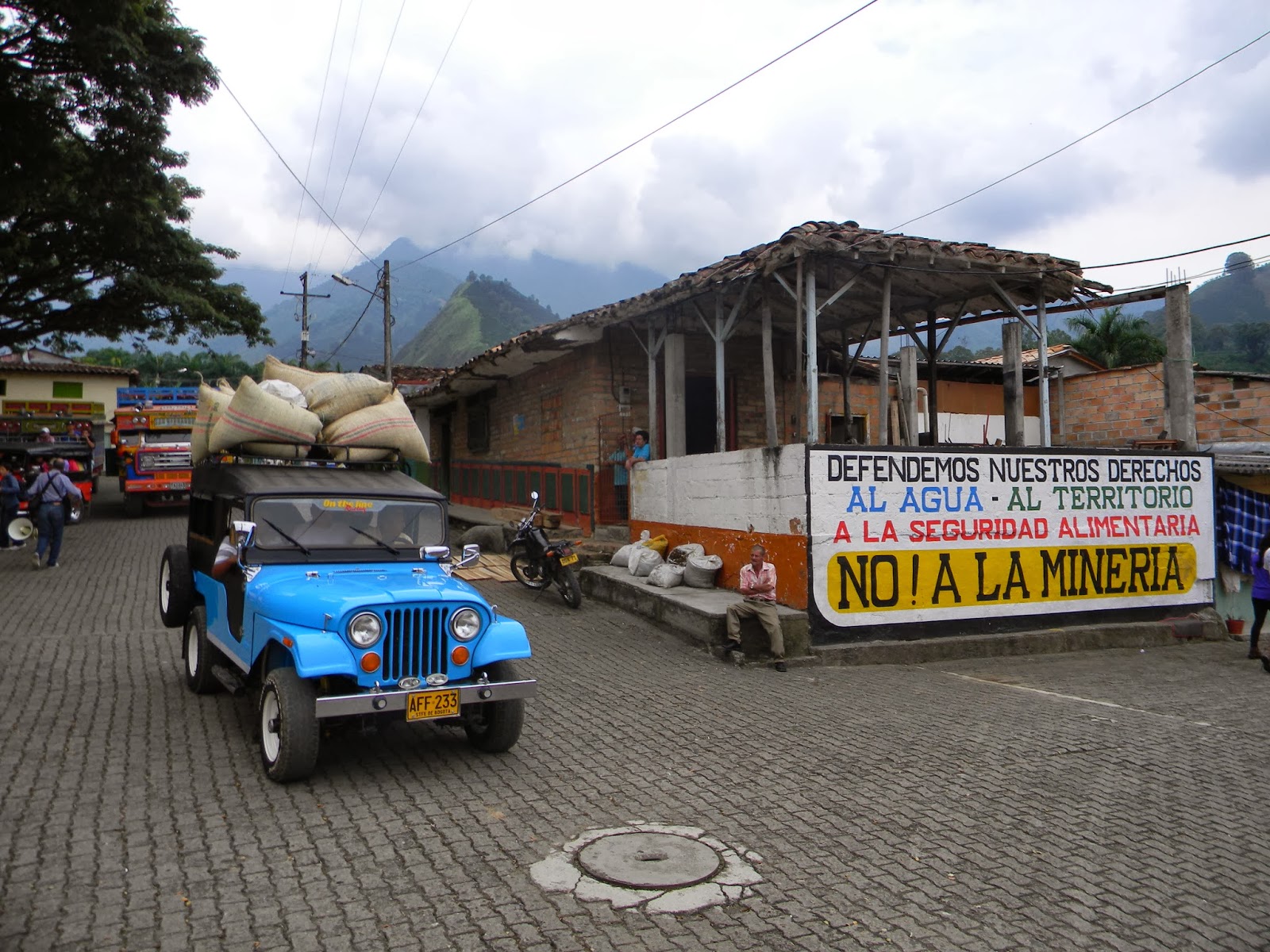
The first day we presented the Mesoamérica Resiste banner to the 8th and 9th grade students of IER, and we also showed photos and told them about the murals we've painted in La Jagua, Huila (Colombia) and Retalteco, Petén (Guatemala). The following days, people from the community took us to special and sacred places, and we also saw the problems in the region that are threatening those spaces. A short distance from the waterfall known as “Cola de Caballo” (Horse's Tail) there was a tunnel of a gold mine. Although there had been a notice from Corantioquia (a government environmental organization) and the government of Antioquia declaring that mine illegal and closed, a hill of tailings from the mine came all the way to the edge of the river, and water pipes in the river and tools inside the mine were enough evidence that people continue to work this mine. We also saw all over the area how the agricultural lands continued to advance, climbing up the mountainsides, deforesting and leaving nothing but grass or mono crops of coffee.
One of our outings was to the chain of waterfalls and
tunnel known as el Charco de los Patos (the Duck Pond), around 15 students from
the IER accompanied us and together we studied the vegetation and geography of
the land as we walked. Later we did some drawing exercises with students, to
make sketches for the murals, using phrases like “water is worth more than
gold,” “life is worth more than gold,” and “water for life, not for mining” to
help their ideas flow from their minds and on to the page. After individual
students made some sketches, we did another drawing exercise but this time in
groups of 4-5 students.
That night we reviewed over 45 rough drafts and
choosing the most common and representative themes, they created the sketches
of the two murals they would paint in town.
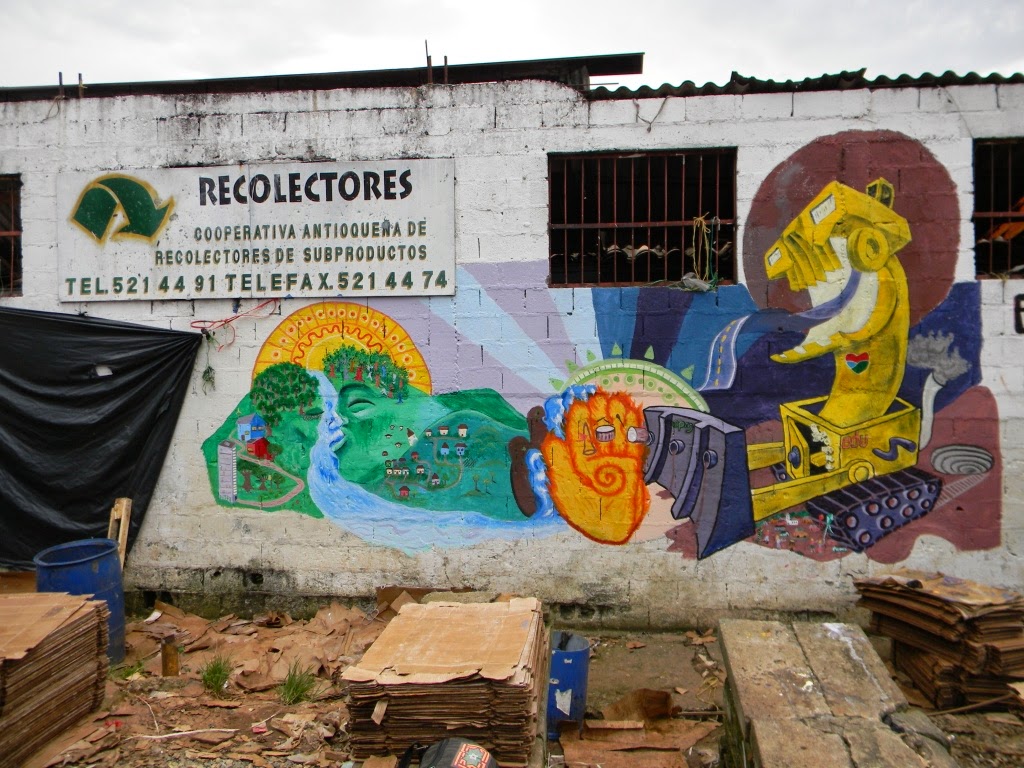
Along with recognizing and recovering memory and knowledge of their territory, another important part of the process of creating the murals was that the students lost their fear of dreaming, of making mistakes, of creating and learning. Besides the students who from the beginning had a lot of energy and desire to participate, it was wonderful to see how those who were a little afraid to pick up a paintbrush lost their fear during the process and participated in the creation of the images. The two murals in town show not only the diversity of plants, animals, and the land, that everyone had to study to represent them well – they also show the diversity of artistic styles and perspectives and tastes of all of the people who participated. During the days that we made the murals, the neighbors of the block where we were painting were incredibly friendly and welcoming, giving us cold juice to drink when we were out in the hot sun, and letting us store our materials in their houses.
Besides the two murals in town, we did various other artistic interventions, including a third mural that was painted in the IER. The mural was the idea of an Emberá Chamí student who told us the story of how a great serpent created the rivers with its body. The last day, after finishing this mural, we had the opportunity to visit the student's community, the Hermeregildo Chakiama Reserve, and meet with the governor and professors from the school at the reserve to share experiences. We were able to tell them about the projects we'd done with the students, and the murals we made, and also show them the big Mesoamérica Resiste banners and share those stories.
To open up the Town Hall meeting, the city councilors of Ciudad Bolívar, led by the Council President, tried to kill the space of the open forum with bureaucracy, imposing a protocol where the only people who could speak were people who had registered at least three days in advance. We Bees asked everyone we could in the auditorium if they'd known about this rule beforehand, and everyone responded that they hadn't.
After that meeting, our artist residency with Contraexpediciones came to an end, and next we will be working on creating the exhibit for the Museum of Antioquia, a combination of photographs of the projects we worked on in Farallones and some examples of the Beehive Collective's graphics campaigns.
lunes, marzo 10, 2014
Contraexpediciones Antioquia: ¡Minería fuera de los Farallones de Citará!
El primer día presentamos el telón de
Mesoamérica Resiste a lxs estudiantes de octavo y noveno del IER, también
mostramos fotos y les contamos sobre los murales que pintamos en La Jagua, Huila y Retalteco, Petén, Guatemala. Los siguientes días, personas
de la comunidad nos llevaron a lugares sagrados y especiales, pero también
vimos las problemáticas de la región que está amenazando estos espacios. A poca
distancia de la cascada conocida como “Cola de Caballo” estaba un socavón, una
mina de oro. Aunque había un aviso de Corantioquia y la Gobernación de Antioquia declarando esa mina ilegal y cerrada;
un cerro de escombros salía de la mina y llegaba a la orilla de la quebrada,
las tuberías regadas por el río y las herramientas dentro de la mina fueron
evidencia suficiente de que en esta mina se sigue trabajando.
También por todas
las montañas se veía cómo la frontera agropecuaria seguía avanzado, subiendo
por la montaña talando bosque y dejando peladeros para sembrar monocultivos de
café. Pocas fincas aún emplean técnicas de agricultura ecológica, sin embargo
hay unas cuantas.
Además de reconocer y rescatar memoria y
conocimiento del territorio, otra parte importante del proceso de crear los
murales consistió en que los y las estudiantes perdieran el miedo de soñar, a
equivocarse, a crear y aprender. A demás de los estudiantes que desde el
comienzo tenían toda la buena voluntad de colaborar, fue bonito ver como los y
las jóvenes que temían un poco agarrar un pincel o brocha iban perdiendo el
miedo durante el proceso y participaban en la creación de las imágenes.
Los dos
murales en el pueblo muestran no solamente la diversidad de plantas, animales y
de territorio que todxs tenían que estudiar para representarlos adecuadamente allí,
también muestran la diversidad de estilos artísticos, miradas y gustos de todas
las personas que participaron. Durante
los días que se realizaron los murales, las vecinas de la cuadra donde
estábamos pintando fueron increíblemente amables y acogedoras con nosotrxs dándonos
jugos fríos para tomar bajo el rayo de sol y dejándonos guardar los materiales
en sus casas.
Al comenzar el Cabildo los concejales de
Ciudad Bolívar liderados por el presidente del Consejo, intentaron matar el
espacio del cabildo abierto por medio de la burocracia, imponiendo un protocolo
donde las únicas personas que podían hablar en el cabildo, fueron personas que
se habían inscrito con más de tres días de anticipación. Las abejitas
preguntamos a todas las personas que pudimos en el auditorio si sabían de esa
norma antes y todxs respondieron que no.
Pasaron al frente una cantidad de
personas de distintos conocimientos incluyendo abogados, ingenieros químicos,
profesores, el anterior alcalde del municipio de Andes, representantes de Corantioquia y otrxs todos
dando buenos argumentos del porque los Farallones de Citará se deben volver un
área protegida, respaldar la agricultura ecológica y rotundamente rechazar la
minería. Cada vez que personas en la
audiencia aplaudían o intentaban hablar o preguntar, el presidente del consejo
amenazaba con suspender el cabildo abierto o traer la policía para sacar a esas
personas, patéticamente escudándose en una norma de “no poder mostrar
parcialidad”.
Aunque el espacio del
cabildo abierto quedó frustrado por la burocracia e intereses de los concejales,
no cabe duda de que la población de Farallones, Ciudad Bolívar y muchas
personas en el suroeste Antioqueño no quieren a la minería y sí quieren café,
quieren sus montañas con bosques y quieren el agua, y están dispuestos de
defender su territorio ante esa amenaza.
Suscribirse a:
Entradas (Atom)