Mostrando entradas con la etiqueta quisquina. Mostrar todas las entradas

miércoles, noviembre 30, 2016

Finding Utopia.

Translation: Radym Berlinger Reitman.
 
 As a result of the Gathering of Anarchist practices that occurred in Neiva, during March of this year, we were able to become acquainted with the experience of the process known as Utopia, the AgroEcological Unidiversity of The Earth, located on the western slopes of the Andes Central Mountain range, in the ancestral territory of the Putimaes, nowadays the rural community of Quisquina, Municipality of Palmira, of the Department of Valle del Cauca. A few months later when we visited the Cauca Valley and Tolima and we got to know this territory.
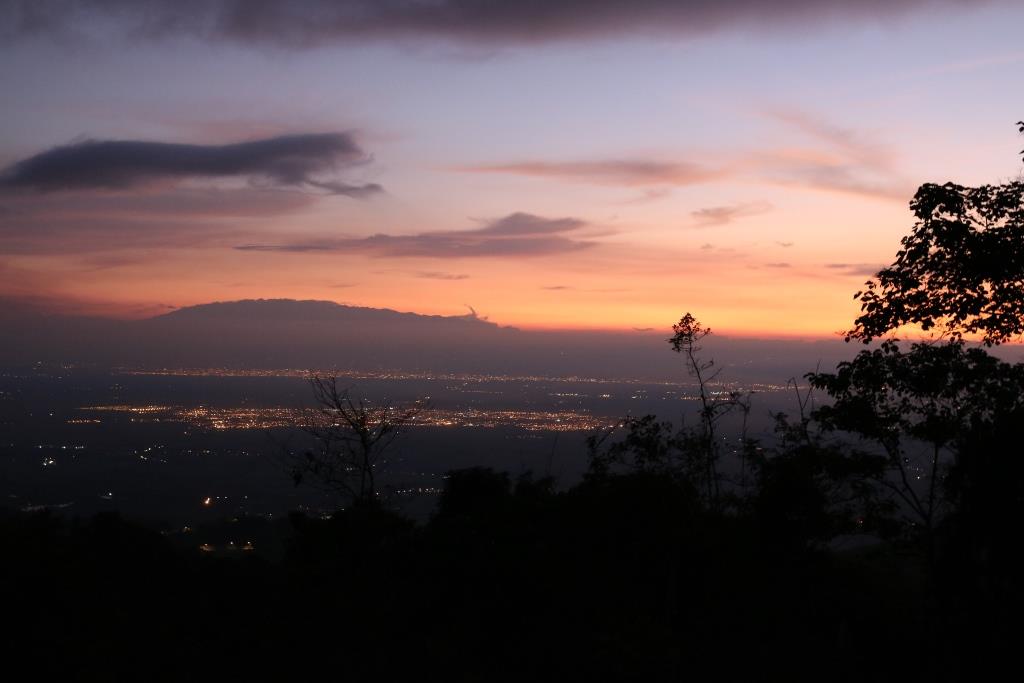
Leaving Palmira in a bus, we made our way up the mountain range for about an hour or so, and from there, with the Beehive banners and the posters, we climbed like little ants until we arrived at Utopia. Since 1994 the trees in certain areas of the Quisquina have been protected and are not allowed to be cut down. This managed ecological reserve was created by and for the community and is made up of approximately 90 hectares. The AgroEcological Unidiversity of The Earth Utopia was born with influences of the processes of home gardens, urban gardening in Cali in the Revolutionary Student Park, and in the teachings of Manuel Quintin Lame.

On the other hand the continuous persecution of urban gardens in the city continually resulted in crops being destroyed and this in part helped push the rural planting process. Originally the idea was to create an eco village, but it ended up being a school. At the beginning different people came from Cali to La Quisquina every weekend, after the Agricultural Strike of 2013, folks began to stay for two week periods in tents. Over time, through collective work (mingas de trabajos) between friends and family members, a house was built.

The first objective was to learn agriculture, to save the seed in the rural environment, far from the problems of the city where gardens are persecuted. This wasn’t so easy since what had been learned through urban agriculture fell short in the rural context, especially in those first days being out in the country. So we were told, “Every day was a learning moment.”

Utopia uses the Chakana, an ancestral symbol also known as the Andean cross, as its principal image, surrounded by 4 principles that are: complementarity, reciprocity, equilibrium, and harmony. Walking through the gardens full of chia, amaranth, quinoa, cape gooseberry, lulo, yucca, corn, plantains, pigeon peas, and arracacha. The harmonious and balanced nature of the diversity was evident.

A Utopia participant explained to us the complementarity between plants, animals, and people. We were shown how a yarumo tree grows tall taking in the sun and below the boro plant needs more shade. In the garden we were shown how rosemary and oregano help the corn, and how ornamental plants attract certain pollinating insects.

With reciprocity, they showed how sometimes they cut plants they leave the cut vegetation in the same place as fertilizer for the crops. These principles are accompanied by 4 pedagogical spirals that are: the profound, the integral, the social, and the environmental.

The profound spiral is about the spiritual and the relationship between the mind and body. Related to the spiral, the integral embraces ancestral memory and the cosmovision embraces the diversity. The social spiral is about decentralized social organization conceived like the Council of Good Living unlike the Communal Action Council imposed by the State. The Councils of Good Living look to create and self-govern, develop solidarity economy and friendly technology and develop personal, community, and territory defense amongst the inhabitants.

Finally, the environmental spiral proposes that the PTO, or Plan of Territorial Regulation, which is created by the State to appropriate natural beings of the territories in the service of the capital be replaced with PCOT, or Community Plan for Territorial Regulation, which promotes the protection of the territory, the forests, the water, which works to establish an agroecological territory, free of genetically modified crops and the use of agrochemicals as well as being free of mining, whether national or transnational.

This proposal, developed as the Agroecological Land, is the proposal of autonomous territories which includes principles from the native and ancestral territories. These undoubtedly are influenced by the libertarian tendencies, something similar to the campesino reserve zone and agrarian territories with anarchist tendencies. The days that we were in Utopia, we had the pleasure of sharing with the ants and bees there.

Everyday, a choir of dozens of chachalacas called us to the labors of the day at about 6:00 in the morning. Those days, we clean under brush with machetes for a while to open up  a space for the construction of a new house and clear the bush necessary for more gardens. We harvested and processed chia that we mixed with flour for arepas that we ate, we fixed a ramp for a BMX bicycle track and also hiked across the reserve and the mountain top, crossing the Chorros River.

We spent a morning sharing ¡Mesoamérica Resiste! with some farmworkers from La Quisquina, who brought a land reclamation process from the Dinamarca Plantation and have been resisting for 15 years through their permanence in the territory, consistent agriculture, animal care, and the processing of natural products.

As we conversed amongst fruit trees we offered a brief explanation of the graphic mural, making the connections between the Colombian context with the free trade agreement FTA and how the policies of the Colombian State bankrupt farm workers, forcing them to migrate to the city, to other countries or to stay on their land to be exploited as cheap labor for the monocrops of the agro industry, as is occurring with sugar cane in the Valle del Cauca.

Utopia has already created its path, as they themselves say, “the road is long and curvy, and in this case, it has a lot of mud.” As a school, Utopia seeks to have knowledge exchanges with other people, help construct projects and move from thought to action. The invitation is open to motivated individuals with initiative and a desire to get their hands dirty to visit them, get to gain an understanding and share in the various jobs working the soil, which are being built on this land with the forest, the sowing of the land and the people.

We hope to visit again to the forest, the chachalacas and our other friends from Utopia. Those interested in visiting Utopia can contact them through these telephone numbers: 316 341 45 87, 318 239 51 69, 318 283 16 39, or: 4864740.


miércoles, agosto 31, 2016

Encontrando la Utopía


Como resultado del encuentro de prácticas anarquistas, evento que ocurrió en Neiva en marzo de este año, pudimos conocer la experiencia de Utopía, la Unidiversidad Agroecológica de la Tierra, localizado en las laderas occidentales de la cordillera central de los Andes, el territorio ancestral de los Putimaes, hoy en día vereda la Quisquina, Municipio de Palmira del departamento del Valle del Cauca.  Unos meses después cuando visitamos el Valle del Cauca y Tolima, conocimos este territorio. 

Saliendo de Palmira en bus, subimos la cordillera como por una hora y pico, y de allí, con los telones de la Colmena y los afiches, subimos como hormiguitas hasta llegar a la Utopía. Desde el año 1994 cuando se inició la protección y no tala a los árboles en ciertos sectores de la vereda la Quisquina . se creó una reserva ecológica manejado por la comunidad de aproximadamente 90 Ha. La Unidiversidad AgroEcologica Utopía nace influenciada de los procesos  de huertas en casa, las huertas urbanas en Cali en el Parque del Estudiante Revolucionario y de las enseñanzas de Manuel Quintín Lame. 

Por otro lado la continua persecución de las huertas urbanas, dejó cultivos destruidos, y desde ese hecho es que se inicia un proceso de cultivo en lo rural. En principio la idea era crear un eco aldea sino lo que terminó siendo fue una escuela. Al comienzo, diferentes personas venían de Cali a la Quisquina cada 8 días. Ya después del Paro Agrario del 2013 empezaron a quedarse por periodos de quince días en carpa. Con el tiempo a través de mingas de trabajos entre amistades y familiares se construyó la casa. 

El primer objetivo es aprender agricultura, guardar la semilla en lo rural, lejos de todos los problemas de la ciudad donde eliminaban las huertas. Esto no fue tan fácil, ya que lo que habían aprendido en la agricultura urbana sirvió en algo, pero se quedaban cortos en el contexto rural, sobre todo que en esos primeros días, así nos contaron, “cada día era un momento de aprendizaje”.  

La Utopía usa la Chakana, símbolo ancestral también conocido como la cruz Andina, en su imagen principal, rodeada por 4 principios que son: complementariedad, reciprocidad, equilibrio y armonía. Caminando por las huertas llenas de siembra de chía, amaranto, quínoa, uchuva, lulo, yuca, maíz, plátano, gandul, y arracacha, la armonía y equilibrio producto de la diversidad fue evidente. 

Un compañero de la Utopía, nos explicaba la complementariedad entre las plantas, los animales, y la gente.  Nos mostró como el árbol de yarumo crece alto tomando el sol y abajo una planta de boro que necesita más de la sombra. En la huerta mostraron como el romero y orégano ayudan al maíz, y como las plantas ornamentales llaman ciertos insectos polinizadores.  

Con la reciprocidad mostraron en como a veces cortan plantas si no dejan la vegetación en el mismo lugar como abono para los cultivos y así también los otros principios. Estos principios son acompañados por 4 espirales pedagógicas que son: lo profundo,  lo integral, lo social y lo ambiental.  

El espiral profundo es sobre lo espiritual y la relación entre mente y cuerpo, relacionado con el espiral, lo integral abarca la memoria ancestral y la cosmovisión acoge la diversidad.  El espiral social, es sobre la organización social descentralizada concebidas como Juntas del Buen Vivir a diferencia de la Juntas de Acción Comunal que impone el Estado. Las Juntas de Buen Vivir buscan crear y el auto gobierno, desarrollar la economía solidaria y tecnología amigable y forjar los habitantes en la defensa personal, comunitario y territorial. 

Finalmente el espiral ambiental plantea ante el POT, o Plan de Ordenamiento Territorial que el Estado también impone para apropiar de los bienes naturales de los territorios a servicio del capital el PCOT o Plan Comunitario de Ordenamiento Territorial impulsa la protección del territorio, los bosques, el agua, que trabaja en establecer un territorio agro ecológico, libre de cultivos transgénicos y el uso de agro químicos al igual de ser libre de minería, sea nacional o transnacional.  

Esta propuesta que se plantea como Tierra Agroecològica, es la propuesta de territorios autónomos con unos principios desde lo nativo y ancestral del territorio. Éstas indudablemente influenciadas por las tendencias libertarias, algo parecido a las zonas de reserva campesina y territorios agroalimentarios pero de corte anarquista.Los días que estuvimos en la Utopía tuvimos el placer de compartir con las hormigas y abejas de allá. 

Todos los días, un coro de docenas de guacharacas, nos llamaban a las labores del día a eso de las 6:00 de la mañana. Esos días ayudamos a “volear” machete un rato para abrir un espacio para la construcción de una nueva casa y limpiando el monte necesario de más huertas. Cosechamos y procesamos chía que mezclamos con la harina de las arepas que comíamos, se arregló la rampa de la pista de bicicletas BMX y también realizamos una caminata cruzando la reserva y el alto de la montaña cruzando el siguiente río Chorros.  

Tuvimos una mañana para compartir ¡Mesoamérica Resiste!, con unos campesinos de la Quisquina, quienes traen un proceso de recuperación de tierra de la Hacienda Dinamarca y llevan 15 años resistiendo a través de la permanencia en el territorio, la agricultura, el cuidado de animales y el procesamiento de productos naturales. 

Conversando entre árboles frutales, se dio una breve explicación de los dos telones, haciendo conexiones con el contexto colombiano con el TLC y como las políticas del Estado colombiano llevan a la quiebra al campesinado, obligándolos migrar a la ciudad, a otro país o quedándose en el territorio para ser explotados como mano de obra barata para los monocultivos de la agro industria, como lo que es la caña de azúcar en el Valle del Cauca.

La Utopía ya tiene mucha trayectoria, así como ellos mismos dicen, “el camino es largo, ondulado y en este caso tiene mucho lodo”. Como escuela, la Utopía busca tener intercambios de conocimiento con otras personas, ayudar a construir proyectos y pensamientos desde la acción. La invitación está abierta a personas motivadas, con iniciativas y ganas de “ensuciarse” las manos para visitarlos, conocer y compartir en las varias labores de la tierra, que se están construyendo en ese territorio con el bosque, la siembra y la gente. 

Esperamos pronto visitar de nuevo los bosques, siembra, guacharacas y otros amigxs de la Utopía.
Aquellas personas interesadas en visitar a la Utopía, pueden comunicarse  a través de estos números telefónicos: 316 341 45 87, 318 239 51 69, 318 283 16 39, o el Fijo: 4864740